
← Back to the Nirvana Garden Trail
You found the Aloe Vera — a water-storing succulent with a special place in Aruba’s landscape and history.
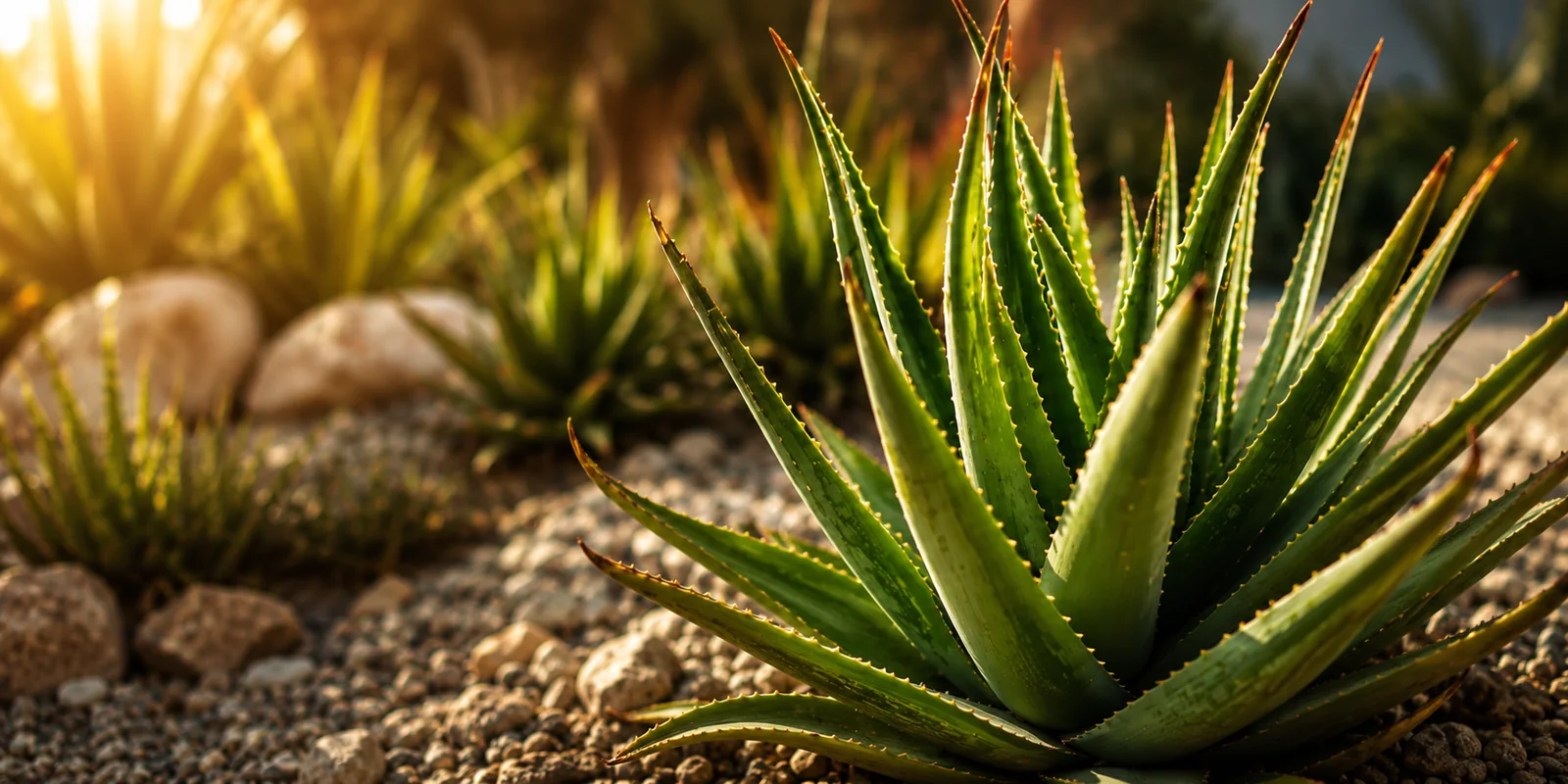
Aloe Vera at a glance
- Botanical name: Aloe vera
- Family: Asphodelaceae
- Plant type: Evergreen succulent
- Likely origin: Arabian Peninsula
- Best conditions: Dry weather, strong light and well-drained soil
- Special feature: Thick leaves that store water
An iconic plant of Aruba
Aloe Vera is one of the plants most closely connected with Aruba. Commercial cultivation began on the island in the nineteenth century, and aloe became an important export. The plant remains a familiar symbol of Aruba’s dry landscape and its long tradition of aloe products.
Built to store water
Each fleshy, grey-green leaf acts as a water reserve. This allows Aloe Vera to survive extended dry periods that would challenge many other plants. A waxy outer surface helps reduce moisture loss, while shallow spreading roots can make use of rain when it arrives.
These adaptations make Aloe Vera a natural fit for sunny, drought-conscious gardens in Aruba. It needs good drainage and should not remain in waterlogged soil.
The gel inside the leaf
The clear inner gel has a long history of use in cosmetic and skin-care products. Aloe leaves also contain a yellow latex close to the outer skin that is different from the clear gel. Guests should enjoy the plant as part of the garden and avoid cutting or applying it themselves.
Did you know?
A mature Aloe Vera can send up a tall flower stalk with tubular yellow flowers. These blooms provide a striking contrast with the plant’s sculptural leaves and can attract visiting pollinators.
Find the next plant
Continue the route with the colourful Bougainvillea or the Columnar Cactus, or return to the Nirvana Garden Trail to explore every plant currently included in the garden collection.