
← Back to the Nirvana Garden Trail
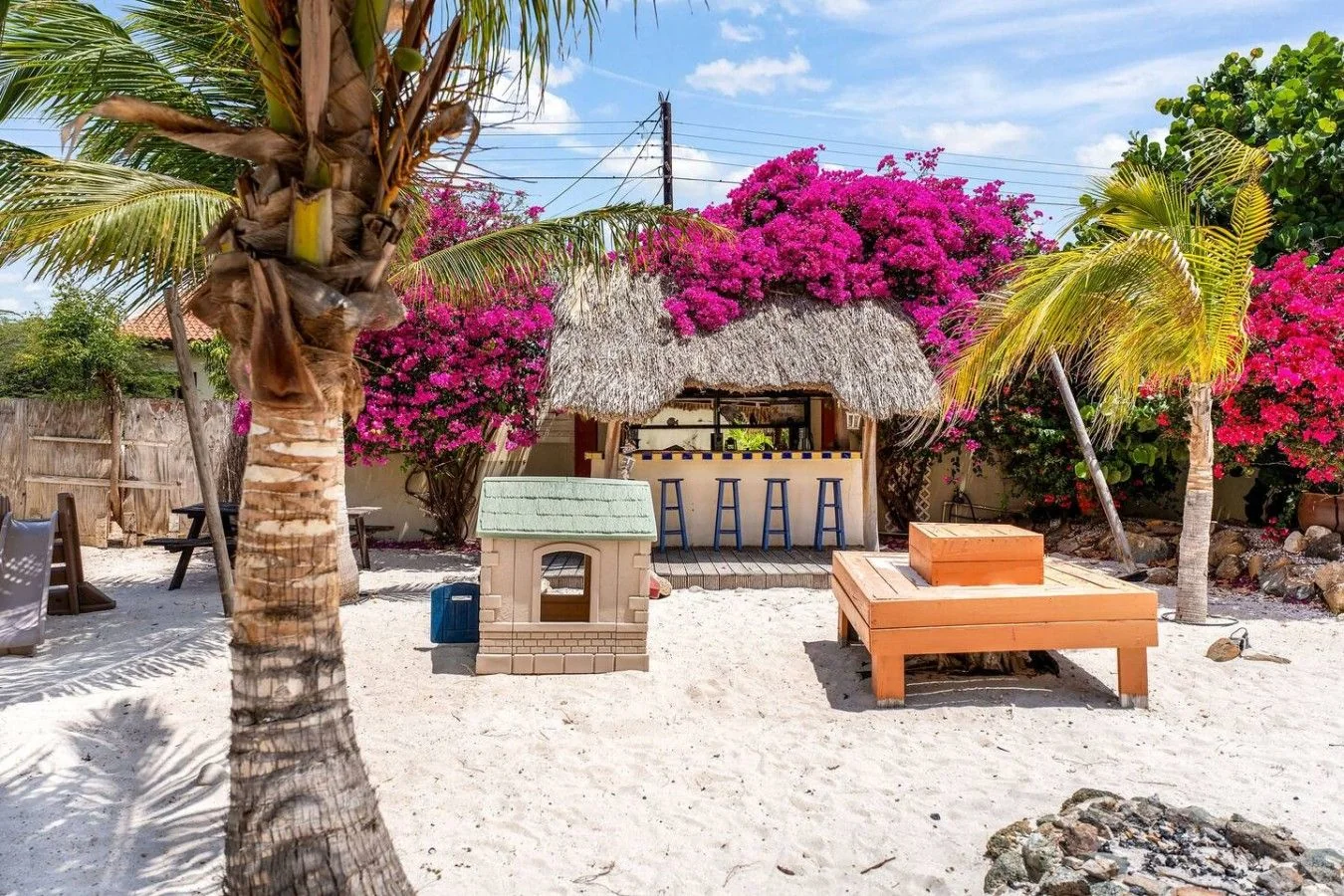
You found the Coconut Palm — a classic tropical palm bringing movement and shade to Villa Nirvana’s sandy garden.
Coconut Palm at a glance
- Botanical name: Cocos nucifera
- Plant type: Tall solitary palm
- Native range: Central Malesia to the southwest Pacific
- Signature feature: Long feather-like leaves and fibrous coconuts
- Best conditions: Tropical warmth, sunshine and free-draining soil
- Garden location: Sandy garden, pool area and outdoor bar
A moving canopy in the trade winds
Coconut Palms help create the relaxed island atmosphere of the garden. Their long leaves move constantly in Aruba’s trade winds, producing shifting shade across the white sand, play area and outdoor seating. Their curved trunks and high crowns also keep sightlines open across the garden.
A fruit designed to travel
The coconut is surrounded by a thick, fibrous husk with an air-filled structure that helps it float. This allows coconuts to travel by water and explains how the palm became established across tropical coastlines. People later spread and cultivated it even more widely for food, fibre, oil and building materials.
Why Coconut Palms fit Aruba
Coconut Palms enjoy warmth and bright light. They tolerate coastal conditions better than many trees, although established palms still benefit from water during prolonged dry periods. At Villa Nirvana they are planted where their height, movement and filtered shade complement the open-air character of the garden.
Garden safety
Mature coconuts and old fronds are heavy. Well-maintained palms are inspected and managed so loose fruit and dead material do not remain above areas used by guests.
Find the next plant
Look near the centre of the garden for the Date Palm, or return to the illustrated Nirvana Garden Trail map.